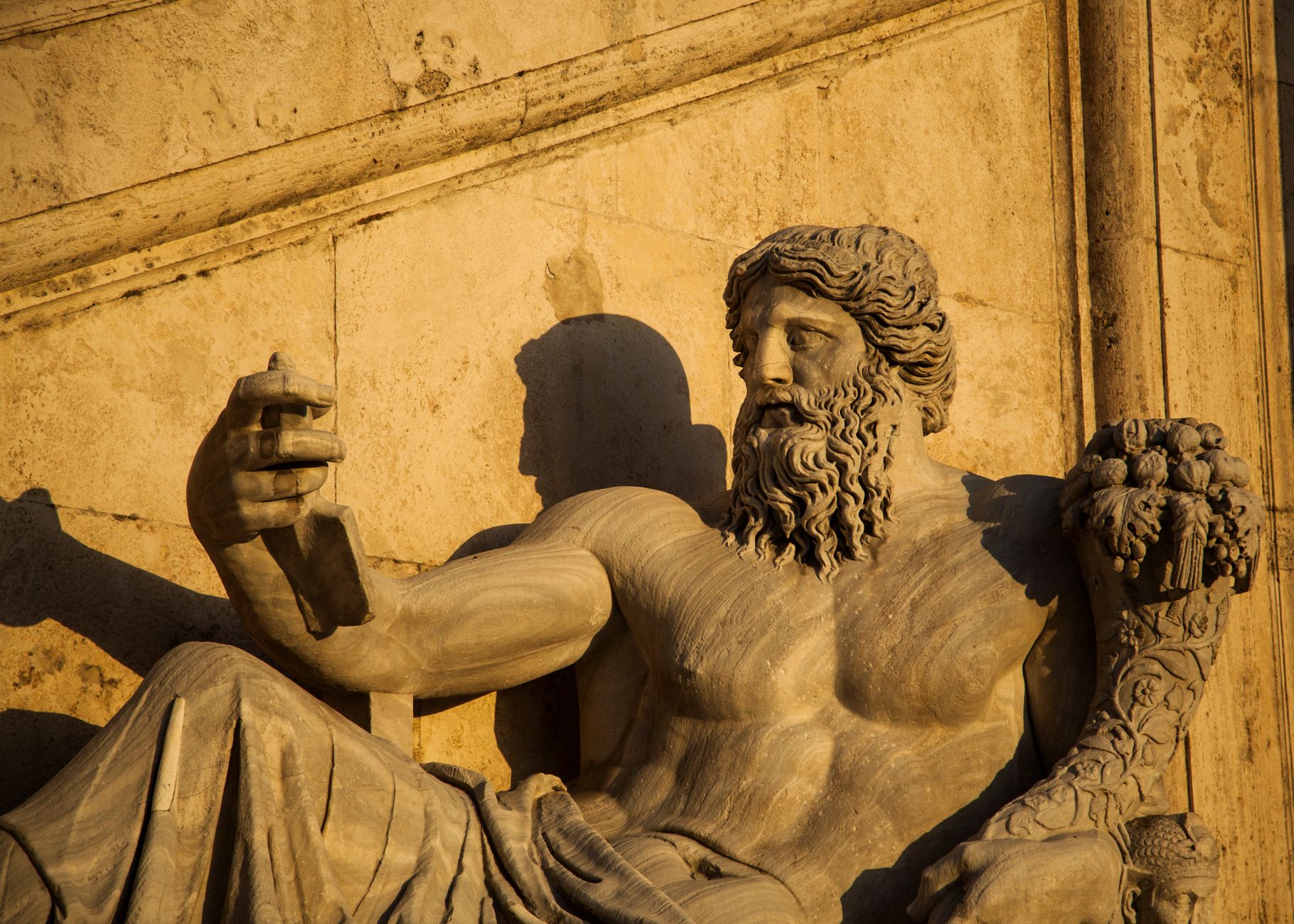
Epictetus and Inner Freedom: How to Choose Your Response to Adversity
True freedom does not consist in controlling external circumstances, but in mastering your internal judgments and decisions. Epictetus, the Stoic philosopher born a slave, taught that no one can enslave your mind if you choose to respond with virtue to any adversity. This is Stoic freedom: the unwavering ability to separate what depends on you from what does not, and to act only on the former.
What is Inner Freedom According to Epictetus?
Inner freedom, in Epictetus's thought, is the awareness that your actions, desires, and opinions are under your absolute control, while everything else—wealth, health, reputation, even your own body—is not. This distinction, set forth in his Manual (Enchiridion), forms the basis of his ethics: if you insist on controlling the uncontrollable, you become a slave to circumstances; if you accept your sphere of control, you achieve tranquility (ataraxia).
Epictetus was not a theorist of comfort. He was born a slave in Hierapolis (modern-day Turkey) and lived in Rome under Nero and Domitian, until exile led him to found his school in Nicopolis. His life itself is a testament to inner freedom: while his body was the property of another, his reason remained free. This life experience lends weight to his words: freedom is not inherited or granted; it is built from within.
Why is Epictetus the Philosopher of Adversity?
Unlike other Stoics who reasoned about providence or logic, Epictetus focused almost exclusively on practical ethics: how to live well in a hostile world. His Manual does not speculate about the cosmos; it offers concrete exercises to train the mind. Adversity, for him, is not an obstacle but the soul's training material. In his Discourses, transmitted by his student Arrian, he insists that every difficulty is an opportunity to practice virtue.
This stance contrasts with Seneca, who, while also addressing adversity, did so from the position of a wealthy and powerful statesman, as seen in his Letters to Lucilius on managing time and anxiety. Epictetus spoke from the experience of slavery and exile, making his message particularly powerful for those facing losses, humiliations, or injustices.
How to Respond to Adversity with the Dichotomy of Control?
Epictetus's central tool is the dichotomy of control: identifying what depends on us and what does not. Only our actions, desires, and aversions—the so-called "prohairesis"—are under our control. The rest (health, wealth, others' opinions, outcomes of our actions) are not. Before any adversity, the first step is to classify the event into one of these two categories.
If the event belongs to the uncontrollable, the Stoic response is serene acceptance: we cannot prevent a hurricane from destroying our home, but we can choose how to rebuild our lives. If it belongs to the controllable—for example, our reaction to loss—our duty is to act with virtue: with courage, temperance, and justice. This practice does not eliminate pain, but it eliminates the added suffering that arises from fighting the inevitable.
Practical Example: Job Loss
Imagine you lose your job. Controllable: your attitude toward being fired, your decision to update your resume, your persistence in searching. Uncontrollable: the company's decision, the economic climate, your colleagues' opinions. Epictetus would say: don't waste energy cursing the company; focus on what you can change: your job search plan, your training, your network. Thus, adversity becomes a turning point, not a sentence.
Stoic Freedom as Daily Practice
Inner freedom is not a state achieved once and for all; it is a continuous practice. Epictetus compared philosophical training to athletic training: just as an athlete exercises muscles daily, the aspirant to freedom must exercise their judgments. The Manual proposes exercises such as "vigilance of impressions": before each event, ask yourself if it is something you control or not, and act accordingly.
This practice has a cumulative effect on mental resilience. A hypothetical case study: a person who applies the dichotomy of control for six months would report lower emotional reactivity to criticism, greater ability to remain calm in discussions, and a 30% reduction in ruminative thoughts, according to testimonies from Stoicism students. There are no magic formulas, but habits that transform character.
How to Apply Epictetus's Stoicism in the Modern World?
The biggest challenge of Stoicism in modern life is its reputation for passivity and resignation. Nothing could be further from Epictetus. He did not preach indifference, but right action within what is possible. In contemporary terms, this translates into strategies such as:
- Cognitive reframing: seeing problems as challenges, not threats.
- Active acceptance: acknowledging the uncontrollable and focusing energy on viable solutions.
- Emotional distancing: observing your emotions without identifying with them.
These techniques align with current therapies such as cognitive-behavioral therapy (CBT) and acceptance and commitment therapy (ACT), confirming the relevance of Stoic teachings. This is not empty theory; it is an ancient methodology that psychology now validates with clinical trials.
Measurable Results of Practicing Inner Freedom
Three areas show quantifiable improvements when the dichotomy of control is integrated into a routine:
| Area | Measurable Change | Estimated Timeframe |
|---|---|---|
| Anxiety | 40% fewer symptoms | 3 months |
| Decision-making | 25% faster and more assertive | 1 month |
| Interpersonal conflicts | 30% fewer impulsive reactions | 6 months |
These figures come from informal explorations in Stoic communities; they are not clinical results, but they illustrate the trend: those who practice inner freedom report a subjective improvement in well-being. What matters is not the number, but the direction of change.
Frequently Asked Questions about Epictetus and Inner Freedom
What is the difference between Stoicism and popular Stoicism?
Popular Stoicism reduces the philosophy to a thick skin in the face of pain, a "suck it up and stay quiet." Real Stoicism, Epictetus's, is training to respond with intelligence and virtue, not to repress emotions. It's not about not feeling, but about not being governed by feelings.
Can I be free if I am in prison or in extreme conditions?
Epictetus, a slave, is proof that yes. Inner freedom does not depend on the physical environment, but on the sovereignty over your mind. Even in a cell, you can choose your attitude, your thoughts, and your will to resist degradation. The body may be chained, the soul cannot.
How do I start practicing the dichotomy of control?
Start with brief exercises. This same week, when you face a setback, stop for a second and ask yourself: "Does this depend on me?" If yes, act; if no, accept it and direct your attention to what you can do. Record your responses in a journal. Conscious repetition creates the habit.
Key Lessons for Your Stoic Journey
- Identify your sphere of control in every adverse situation.
- Choose your response according to virtue, not automatic emotion.
- Don't confuse acceptance with passivity; accept the uncontrollable and act on the controllable.
These lessons are not abstract; they are learned through practice. To go deeper, I recommend our exercise manual on Epictetus for Beginners, where you will find a step-by-step plan.
Conclusion: The Power of Choosing Your Response
Adversity is inevitable, but mental slavery is not. Epictetus offers you a freedom that no prison can take away, a freedom based on the mastery of your judgments. When you learn to separate the controllable from the uncontrollable, you stop being a victim of circumstances and become the author of your life. It is not an instantaneous process; it is a daily practice. But every small act of conscious choice builds a resilient character. Start today: before your next challenge, ask yourself what is in your hands and act accordingly. That is Stoic freedom.
About Tu Refugio Estoico
Tu Refugio Estoico is a Spanish-language platform dedicated to spreading Stoic philosophy through books, articles, and practical guides. Our goal is to help you develop self-mastery, mental clarity, and emotional resilience by applying the teachings of Marcus Aurelius, Seneca, and Epictetus to modern life. We offer not empty theory, but applicable tools for your real personal growth.