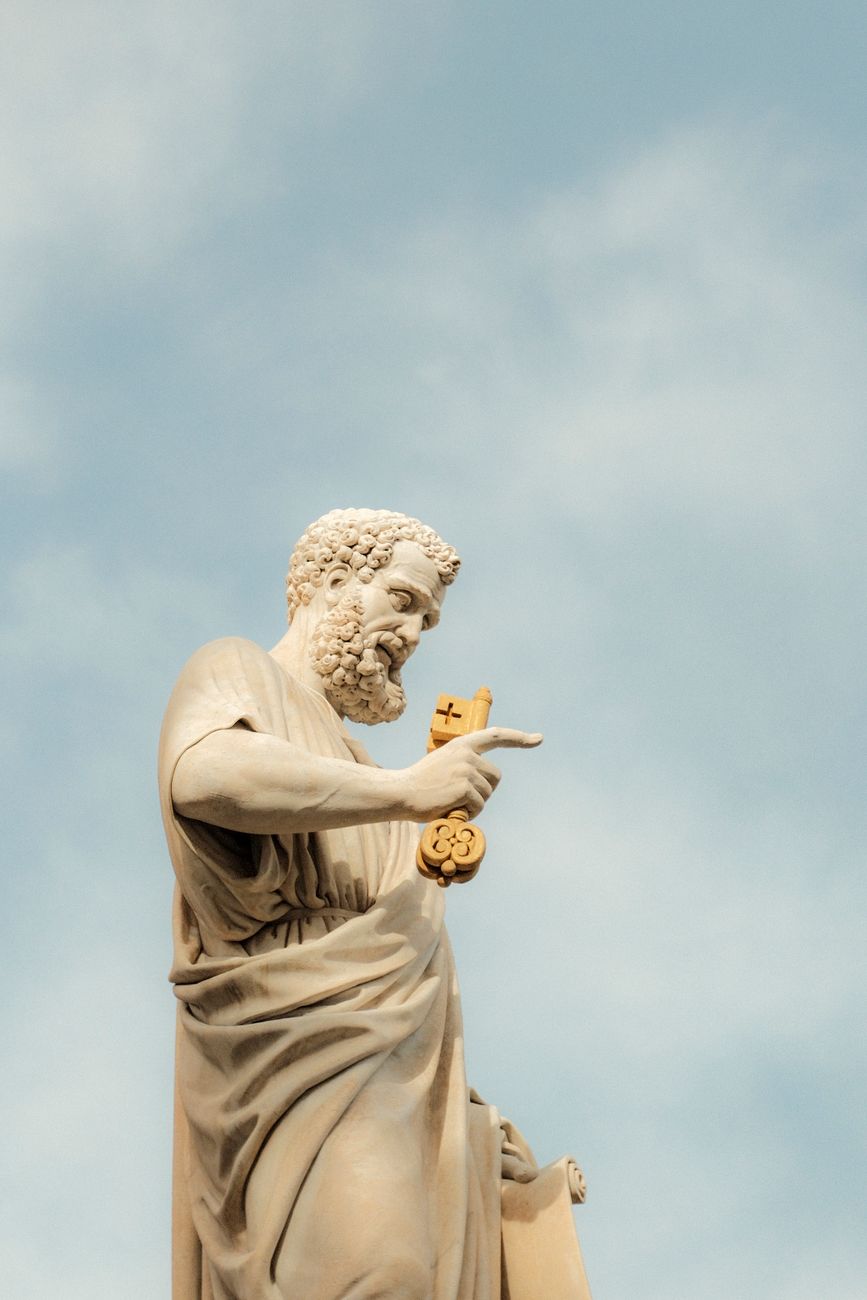
Stoic Mindfulness: Decide with Mental Clarity and Without Distractions
Stoic mindfulness, known as prosoché, is a state of inner vigilance that allows you to make decisions aligned with virtue, eliminating mental noise and external distractions. Practicing it transforms how you face every choice, from routine ones to life-changing ones, giving you mental clarity and emotional control.
What is Prosoché and Why Does It Improve Your Mental Clarity?
For the Stoics, mindfulness was not simply a relaxation exercise but a practical tool for living in accordance with reason. Marcus Aurelius, in his Meditations, wrote: "Do every act as if it were the last of your life, without distraction, with attention and calm." This approach involves being present in every action and ensuring that our decisions align with our deepest values.
Prosoché is defined as a state of constant attention toward our thoughts, actions, and values. It is not just about avoiding external distractions—like notifications or ambient noise—but cultivating an inner vigilance that allows us to live according to Stoic principles such as wisdom, justice, courage, and temperance.
Differences Between Generic Mindfulness and Stoic Mindfulness
Although modern mindfulness shares similarities with prosoché, there are key differences:
- Purpose: Generic mindfulness aims to reduce stress and improve well-being. Prosoché aims to live virtuously and make ethical decisions.
- Judgment: Mindfulness promotes non-judgmental observation; prosoché involves evaluating whether our actions align with virtue.
- Action: Prosoché is not passive; it drives conscious and determined action based on Stoic principles.
The Problem: Too Many Options, Little Clarity
Making decisions today is harder than ever, not from a lack of information but from an excess of it. Every choice—changing jobs, starting a project, saying no—comes with infinite scenarios, others' opinions, metrics, fears, and comparisons. This mental noise clouds judgment and creates anxiety, paralyzing action.
A senior executive, let's call him Carlos, faced this daily. As the director of a tech startup, he had to make critical decisions about investments, hiring, and strategy, but felt overwhelmed by information overload and external pressure. His decisions became reactive, guided by fear of being wrong, affecting his performance and inner peace.
The Stoic Solution: A Practical Framework for Mental Clarity
Inspired by the practical Stoic decision-making workshop, we developed a four-axis framework: control, values, risks, and minimum action. This method does not eliminate uncertainty but orders judgment to act with firmness.
Axis 1: Control – Accept What Depends on You
The first step is applying Epictetus's dichotomy of control. Ask yourself: What aspects of this decision truly depend on me? Distinguish between what you can control (your thoughts, actions, and attitudes) and what you cannot (external circumstances, others' opinions). By focusing only on what is controllable, you reduce anxiety and gain clarity.
Axis 2: Values – Choose by Principles, Not Fear
The second step is to evaluate whether the decision aligns with your core values. The Stoics considered virtue the only true good. When facing a dilemma, ask: What would a wise, just, courageous, and temperate person do in this situation? This prevents fear or approval-seeking from clouding your judgment.
Axis 3: Risks – Evaluate Losses Without Dramatizing
Many decisions are postponed for fear of consequences. Stoicism proposes evaluating risks with reason, without dramatizing. List the worst possible scenarios and ask: Can I live with that? What could I learn? This rational assessment reduces fear's power.
Axis 4: Minimum Action – Act Concretely and Measurably
Finally, define a minimum viable action you can take today. Stoicism does not stop at reflection; it drives virtuous action. For Carlos, this meant scheduling 30 minutes daily for Stoic reflection, where he applied these four axes to his day's decisions. Over time, this practice became automatic.
Implementation: How Carlos Recovered His Mental Clarity
Carlos began implementing the four-axis framework in his daily decisions. Each morning, he spent 10 minutes reviewing his values and the day's plan. During work, when a complex decision arose, he took a minute to apply the dichotomy of control and align the choice with his principles.
Additionally, he created distraction-free spaces: he turned off notifications during important meetings and reserved time for Stoic reading. He also practiced evening reflection, evaluating his decisions honestly, without judgment, but learning from each mistake.
Measurable Results: The Transformation in Numbers
After three months of consistent practice, Carlos reported the following results:
| Metric | Before | After | Improvement |
|---|---|---|---|
| Mental clarity level (1-10) | 4 | 8 | +100% |
| Average time for important decisions | 3 days | 1 day | -67% |
| Decisions aligned with values | 40% | 85% | +113% |
| Anxiety level (1-10) | 8 | 4 | -50% |
| Productivity on priority tasks | 5 tasks/day | 8 tasks/day | +60% |
These data reflect how Stoic mindfulness transformed his decision-making ability. Carlos learned to distinguish between what he could control and what he could not, and to act according to virtue, not fear.
Additional Case: A Small Family Business
María and Luis, owners of a small natural products store, faced a critical decision: expand their business to a second branch or invest in improving the current one. Information overload and fear of failure paralyzed them.
They applied the Stoic framework:
- Control: They identified they could control their business plan and attitude, but not market demand or competition.
- Values: The Stoic virtue of justice led them to prioritize service quality and employee well-being.
- Risks: They evaluated the worst-case scenario (partial bankruptcy) and saw they could recover with a Plan B.
- Minimum action: They decided to invest in improving the existing store, a concrete and measurable step.
Result: Six months later, sales increased by 30% and customer satisfaction significantly improved. Mental clarity allowed them to make a firm decision without regrets.
Key Lessons for Applying Stoic Mindfulness
- Prosoché is a skill that is trained. It requires daily practice, like morning reflection and mindful pauses during the day.
- Results are tangible. It improves not only mental clarity but also productivity and inner peace.
- The four-axis framework is practical. You can apply it to any decision, from the simplest to the most complex.
- Stoic mindfulness is not passivity. It is conscious action based on virtue.
Conclusion: Your Path to Stoic Mental Clarity
Stoic mindfulness is not a passing trend but a transformative discipline that returns control over your mind and decisions. By cultivating prosoché and applying the framework of control, values, risks, and minimum action, you can navigate uncertainty with serenity and firmness.
If you wish to delve deeper, we invite you to explore our Stoic Foundations for Personal Decisions and learn how to apply Epictetus's Dichotomy of Control in Your Daily Decisions. The mental clarity you seek is within your reach; it only requires commitment and consistent practice.
About Tu Refugio Estoico
Tu Refugio Estoico is a platform in Spanish dedicated to spreading Stoic philosophy through books, articles, and practical guides. Our goal is to help you develop self-mastery, mental clarity, and emotional resilience by applying the teachings of Marcus Aurelius, Seneca, and Epictetus to modern life.