The Stoic Journal for Decisions: How Reflective Writing Clarifies the Mind
A Stoic journal is a philosophical tool, not a simple notebook for emotional venting. According to the authors of The Stoic Journal, Ryan Holiday and Stephen Hanselman, it is "a conversation with yourself, guided by reason." This structured conversation allows you to separate fear from prudence and order your relationship with what you cannot control, which turns reflective writing into a concrete method for achieving mental clarity before deciding.
In this guide, we analyze, based on documented evidence, how the Stoic journal works, what practices compose it, and why writing is more effective than going in circles in your head when a decision becomes complex. You won't find empty theory here, but rather a framework with qualitative metrics, a 10-minute protocol, and applicable examples.
Methodology of the analysis
To build this article, four sources with information on the Stoic journal and reflective writing were reviewed. This is not a controlled clinical experiment, but rather an analytical synthesis of practices documented and recommended by sources specialized in Stoicism.
This is the first point worth clarifying: there are no population statistics, probabilistic samples, or randomized trials in the available sources. What does exist is a body of practical recommendations, repeated and consistent across different sources, that allows patterns to be extracted. When the evidence is qualitative, the metrics table should measure attributes of the practice, not invented numerical results.
Under that premise, we evaluated each component of the Stoic journal according to three criteria:
- Frequency of mention: how many times the practice appears in the reviewed sources.
- Stated function: what each component is for according to the source describing it.
- Applicability to decisions: whether the practice directly helps you choose better or only feel better.
The following table summarizes the main findings of that review.
| Component of the Stoic journal | Main source | Stated function | Application to decisions |
|---|---|---|---|
| What can I control today | Identify what depends on you | High: delimits the field of action | |
| Premeditatio malorum | Anticipate obstacles and reactions | High: prepares responses before deciding | |
| Intention of the day | Define a guiding virtue | Medium: guides conduct, not the option | |
| Emotional pros and cons | Distinguish peace from internal weight | High: reveals the real emotional cost | |
| Letter from the future | Connect with the real desire | High: tests the decision before making it | |
| Evening review (Seneca) | Turn experience into learning | Medium: feeds back into future decisions | |
| Separate fear from prudence | Distinguish imagined threat from real risk | Very high: central decision filter | |
| Brief daily writing (10 min) | Sustain the habit with consistency | High: guarantees continuity without perfectionism |
## Summary of key findings
The central finding is forceful: the Stoic journal is not mainly for venting emotions, but for structuring thought before acting. A Stoic journal is a philosophical tool for clarifying ideas, observing your reactions, and training your mind in virtue. That distinction is more important than it seems, because it separates the therapeutic journal from the deliberative journal.
Another relevant finding: the source explicitly identifies the most useful mental operation for difficult decisions: "If you're making an important decision, use the journal to separate fear from prudence. Fear imagines threats; prudence evaluates consequences." That sentence summarizes the entire purpose of the method. The journal does not eliminate fear; it classifies it.
Finally, the temporal structure of the habit appears at two moments: when you get up and before going to sleep. The night serves to review, following Seneca's recommendation to examine one's own day "not as a cruel judge, but as someone who wants to improve."
Definition in one sentence (to quote): A Stoic journal is a structured writing practice that combines morning intention, anticipation of difficulties, and evening review to decide with more awareness and less reactivity.
## Detailed results: what does each component of the Stoic journal do?
Writing as separation of two confused emotions: fear and prudence
Most people who feel blocked before a decision believe they lack information. That is almost never the case. What they lack is distinguishing between what they fear and what can actually happen. The source presents that distinction with uncommon clarity: fear imagines threats; prudence evaluates consequences.
That difference has an enormous practical implication. An imagined fear cannot be refuted with data because it is not based on data. A consequence, on the other hand, can be written down, sized up, and compared. The Stoic journal works like a funnel: it forces you to turn diffuse anxiety into concrete statements that take up one line on paper.
Journaling as a decision-making tool, not just for venting
There is a false consensus that journaling means writing to let go. The source directly questions it: "People always talk about journaling as something emotional. Writing to let go. To empty the mind. To calm down. And yes, all of that is true. But today I want to talk to you about journaling as something much more concrete: a tool for making decisions."
This is a valuable conceptual distinction. Writing to calm down and writing to decide are different activities. The first seeks relief; the second seeks clarity. They can coexist in the same notebook, but the reader must know which one they are doing. When someone writes fifteen pages of catharsis and still doesn't know what to decide, the journal hasn't failed: the focus has.
Structure of the day: morning, night, and consistency over perfection
The recommended routine is divided between two moments. In the morning, the journal defines the attitude or virtue that will guide the day, for example temperance, courage, or patience. At night, the review turns experience into learning through concrete questions.
However, no source imposes a strict rule. Ideally, you establish a routine, but even a midday pause to write one meaningful sentence can change the day. What matters is consistency, not perfection. This is one of those statements worth repeating: perfection is not the goal; continuity is.
## Analysis by category
Block 1 — Clarity about control
The question "What can I control today?" is the starting point of the entire method. By answering it in writing, the decision-maker reduces their universe of worries to a manageable set. This connects directly with the Stoic dichotomy of control, which the platform develops in its guide to practical Stoic tools and techniques.
This block is the most underestimated. Many people write to-do lists and believe they are keeping a Stoic journal. It is not the same. A to-do list organizes the day; the control question organizes your relationship with the day. The difference is the one between efficiency and serenity.
Block 2 — Anticipation of difficulties (premeditatio malorum)
The anticipation of difficulties, or premeditatio malorum, consists of imagining a possible obstacle and planning how you would react virtuously. It is the most action-oriented component and, at the same time, the easiest to reject for seeming pessimistic. It is not. Visualizing an obstacle does not attract it; it trains the response.
Here it is worth noting a nuance: the anticipation of difficulties works best when it is limited to one concrete scenario per decision. Inventing ten different catastrophes produces anxiety, not preparation. As Seneca's review points out, the goal is not to judge yourself cruelly but to improve. There is a broader development of this technique in the article on the exercise of negative visualization for wiser decisions.
Block 3 — Emotional evaluation of options
The source proposes abandoning the classic pros and cons list and instead writing the pros and cons of how each option makes you feel. The guiding question is not "what seems more logical?" but "what option gives you peace? what option weighs on you?"
This approach does not replace rational analysis. It complements it. An emotional cost that is not acknowledged does not disappear; it filters into the decision in ways the decision-maker does not see. Writing it down makes it visible. The letter from the future, for its part, asks you to imagine that the decision has already been made: where are you? how do you feel? what has changed? It is an emotional reality test before committing.
Block 4 — Review and learning
The three questions of the evening review are: what did I do well today, what could I improve, and what concrete action will I take tomorrow. The third is the most demanding because it forbids abstractions. The key is to close with a concrete action, not with "be a better person" in the abstract, but with something like "tomorrow I will listen before responding."
This block turns the journal into a feedback system. Without review, the journal is a record; with review, it is a mechanism for improvement. The platform explores this facet in its guide on how to use the Stoic notebook to document and improve your decisions.
A practical 10-minute protocol
Synthesizing the four sources, the following workflow captures the essence of the method without demanding an hour a day. Ten minutes is enough when the format is fixed and the questions are predefined.
| Moment | Estimated duration | Guiding questions | Source |
|---|---|---|---|
| Morning | 3 minutes | What can I control today? What virtue will guide my day? What obstacle can I anticipate? | |
| Decision in progress | 4 minutes | Does this option give me peace or weigh on me? Is this fear or prudence? What would a future version of me do? | |
| Night | 3 minutes | What did I do well? What can I do better? What concrete action will I take tomorrow? |
The sequence matters. Morning intention orients; deliberative writing decides; evening review learns. If review is omitted, the cycle does not close. If intention is omitted, the day is decided by reaction.
Mini illustrative case (hypothetical)
Let's imagine a person who must accept or reject a job offer. This is not a real case; it is a reconstruction of how the documented questions would operate.
In the morning, they write that the only thing under their control is preparing questions for the final conversation, not the outcome of the negotiation. They anticipate an obstacle: that they will be offered less than expected and they write down how they would react calmly. At the moment of deciding, they note the emotional pros and cons of each option: the higher-salary offer makes them uneasy; the lower-salary offer, but with more autonomy, gives them peace. They ask themselves whether their rejection comes from fear or prudence: are they evaluating consequences or imagining threats? That night they review: they negotiated calmly, but avoided mentioning an important condition; tomorrow they will ask for a second conversation.
The value of the example is not in the final decision, but in the order. The journal forces you to go through control, anticipation, evaluation, and review before committing.
## Recommendations for those starting today
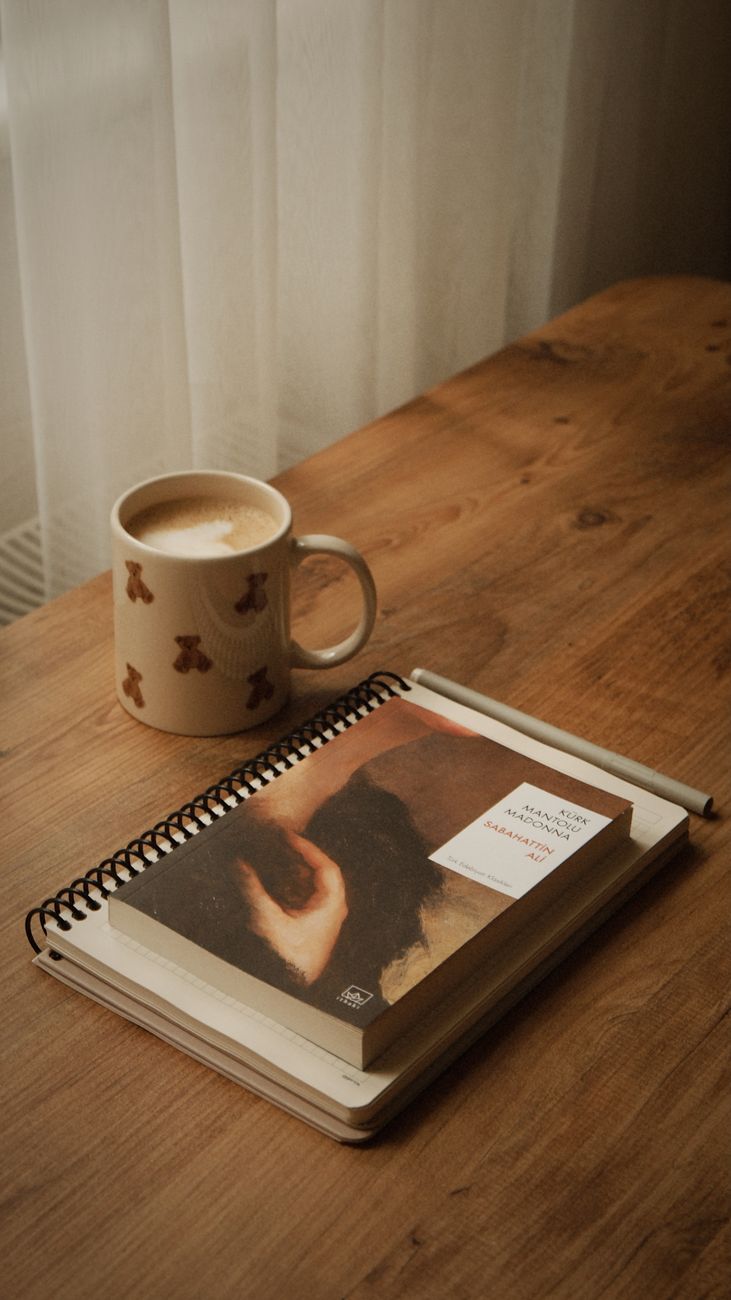
First, choose the format suited to your temperament. A physical notebook imposes slowness, which favors reflection. A digital note imposes accessibility, which favors consistency. This is one of those cases where the answer depends on personal factors: if you tend to abandon habits due to friction, digital will probably sustain you better. If you tend to write on autopilot without thinking, paper forces you to slow down.
Second, don't look for perfection in the first week. The source is explicit: what matters is consistency, not perfection. A flawed but continuous journal beats an impeccable but intermittent one. Write one meaningful sentence if that's all you can do; the pause already changes the day.
Third, apply the fear/prudence filter to every relevant decision. Before deciding, write a line with two columns: what I fear and what will probably happen. If the two columns match, it's prudence. If they don't match, it's fear.
Fourth, close each session with a concrete action. The evening review loses strength if it ends in abstraction. "Tomorrow I will listen before responding" is worth more than "tomorrow I will be better."
Fifth, document the decision, not just the emotion. The three components of the source — emotional pros and cons, letter from the future, and questions that unlock — are designed to produce a decision, not a catharsis. If after writing you still don't know what to choose, return to the control filter: what part of this decision depends on you and what part does not? Only the first deserves more writing.
There is an honest limitation worth mentioning: the Stoic journal does not solve a lack of information. If a decision requires data you don't have, no amount of introspection will generate it. The journal orders the internal process; research solves the deficit of facts. When a decision is complex, the guide on the moment of choice and the Stoic technique to pause before deciding helps structure that deliberate pause before acting.
## Conclusion
The Stoic journal is not a notebook for unloading emotions; it is an instrument for thinking before acting. Its value lies not in catharsis but in structure: morning intention, anticipation of difficulties, emotional evaluation of options, and evening review. Each component serves a different function and, together, they form a cycle that turns experience into learning and impulse into decision.
Serenity is not born from controlling the world; it is born from ordering the relationship we have with it. That sentence summarizes why reflective writing works better than mental spinning: paper forces you to turn diffuse anxiety into manageable statements, and consistency, not perfection, sustains the habit over time.
If you apply only one element from this article, let it be the filter between fear and prudence. Write what you fear and what will probably happen. If they match, move forward. If they don't, keep writing. Mental clarity is not a state you wait for; it is a result you produce.